Posts by miss Tantea

Cologne, or the Scent of Genius

At a time when the narrow streets of Cologne held tight to the stench of sewage and the weight of industrial soot, one man was busy breathing out a dream. Johann Maria Farina, with the patience of a jeweler and the fire of an alchemist, wasn’t just blending oils—he was inventing a new world. In his lab, cedar, citrus, and bergamot swirled together until they gave birth to something unexpected: Eau de Cologne.

At first, it was a small indulgence. Locals ran to Farina’s shop not for status, but to take home a tiny bottle filled with someone else’s dream, escaping their greyness for a moment of brightness. The scent was summer bottled, a clean breeze through a grimy city.

Then came the Seven Years’ War, and the perfume transformed. French troops, after occupying Cologne, carried the fragrance back with them. It followed soldiers into battle, across borders, into homes, and across oceans. The scent became a quiet message of hope, a soft reminder of a time before gunpowder.

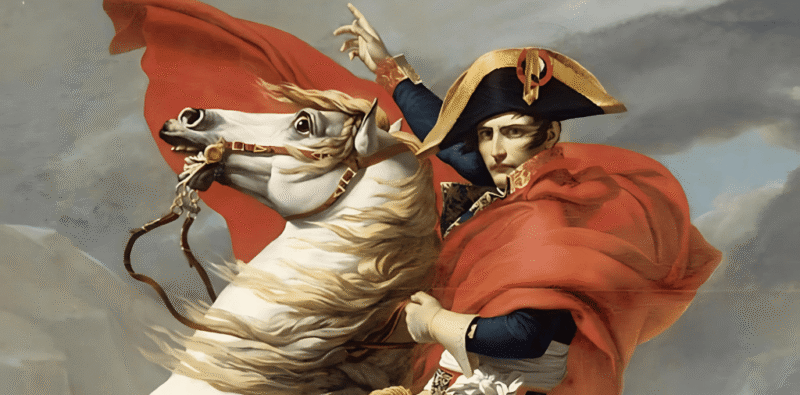
And then came Napoleon. The man who craved genius like others crave sleep soaked himself in the scent. Not just for pleasure, but as ritual. He carried bottles in his boots, in his coat, at his side. His soldiers said you could smell their emperor before you saw him: citrus and herbs swirling in the air, commanding like a banner.

He drank it, too — a few drops on sugar, or diluted in wine. For Napoleon, it wasn’t a fragrance. It was brain fuel, bottled ambition.

But genius is fragile. In exile, stripped of access to his beloved cologne, Napoleon tried to recreate it himself. What came instead was lighter, thinner, more fleeting. He called it “Eau de Toilette.”

And in that name, you can smell the fall. It lacked the weight of history, the strength of the original dream. It was a whisper where once there was a speech.

Still, the world had already been changed. By the mid-19th century, Eau de Cologne had become more than a scent. It was a symbol — of elegance, cleanliness, vision. A quiet genius in a glass bottle.
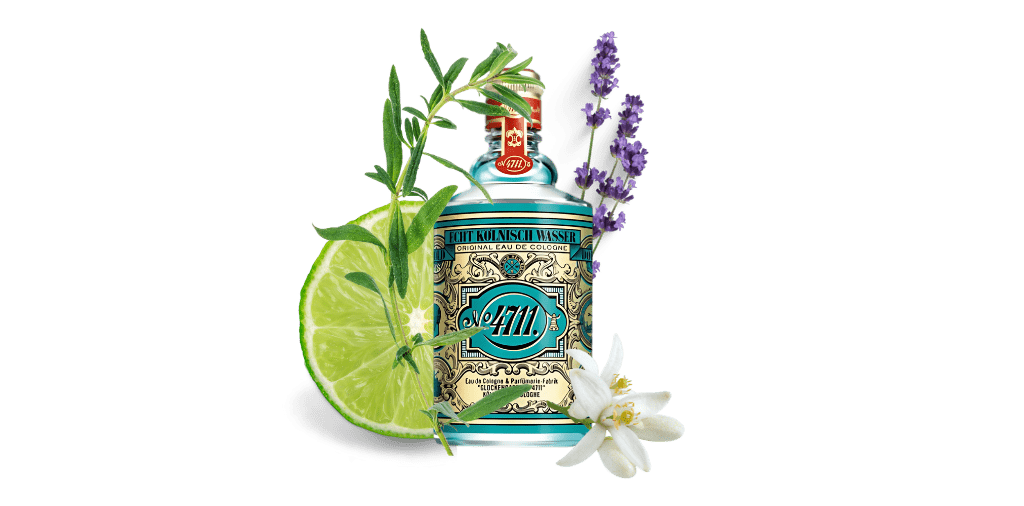
Now, it lives everywhere: in glove compartments, in drawers, on skin. Not to mask, but to remember. Not to overpower, but to lift.

A drop of eternity, carried in the air. A scent that whispers: beauty will save us yet.

Witch’s Brew

At the edge of the forest, just past the chamomile field,
a seven-year-old witch with golden hair is learning to brew potions.

No rat tails from her mother, no dragon scales,
not even the spider from the Blackgrove —
who’s been waiting in his jar for the right moment for two weeks now.
“Too young,” her mother says.
Well, fine then.
Franka will make a potion anyway — with nettles and mint if she must.

The secret is the magic.
And Franka has plenty of it:
it drips from her fingers like honeyed light,
threads of gold tangling in her hair.

When she cups a brew in her palms, it glows amber.
Then the glow fades, the brew cools,
and the fever leaves the child from the next village.
The mother will weep and thank her —
and a week later, she’ll look away in the market,
call her cursed under her breath.
Until the next sickness. Until the next plea.

Franka is nearly used to human strangeness by now.
The village kids don’t play with her — so what?
She has a friend. He purrs, presses his head into her knees,
his eyes as green as May grass.

She crushes mint leaves, rubs chamomile and oak moss between her fingers —
and the wind howls louder.
It will bring rainclouds, dark as her cat’s fur,
and the dry earth will stretch up to them with every blade of grass,
every trembling petal.

Lightning will draw rivers in the sky.
And she, Franka, the golden-haired witch,
will dance in the rain.

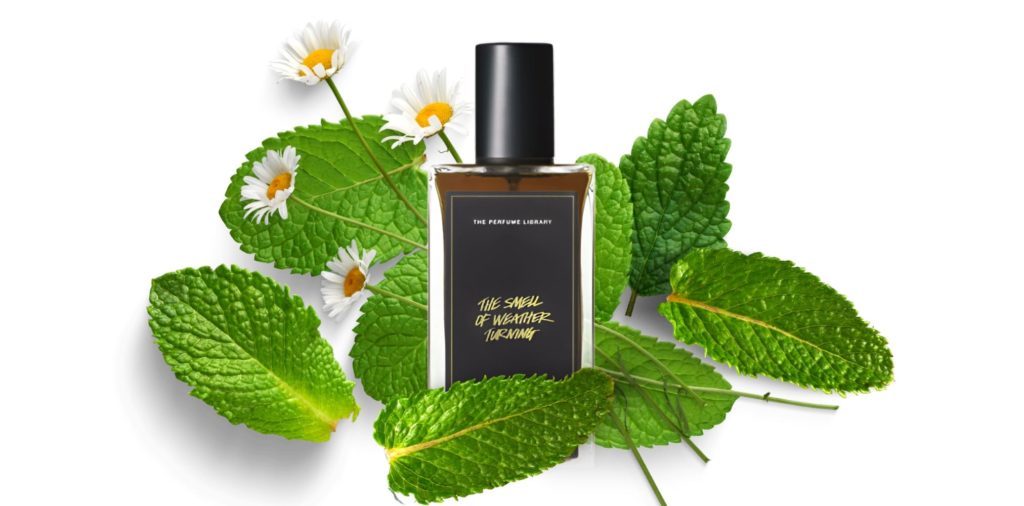
The Smell of Weather Turning Lush
Summer herbs carry a desperate scent in the moments before a storm.

The Paradise Tree, or Oud

They spread out like valleys, like gardens by the riverside, like aloes planted by the Lord, like cedars beside the waters.
— Numbers 24:6

Its story began over 3,500 years ago.
It weaves through every culture, speaks in every religion, and carries countless names wrapped in myth: the paradise tree, the aloeswood, kalambak, agar tree, aquilaria — oud.

What gives birth to beauty?
Is it joy? No.
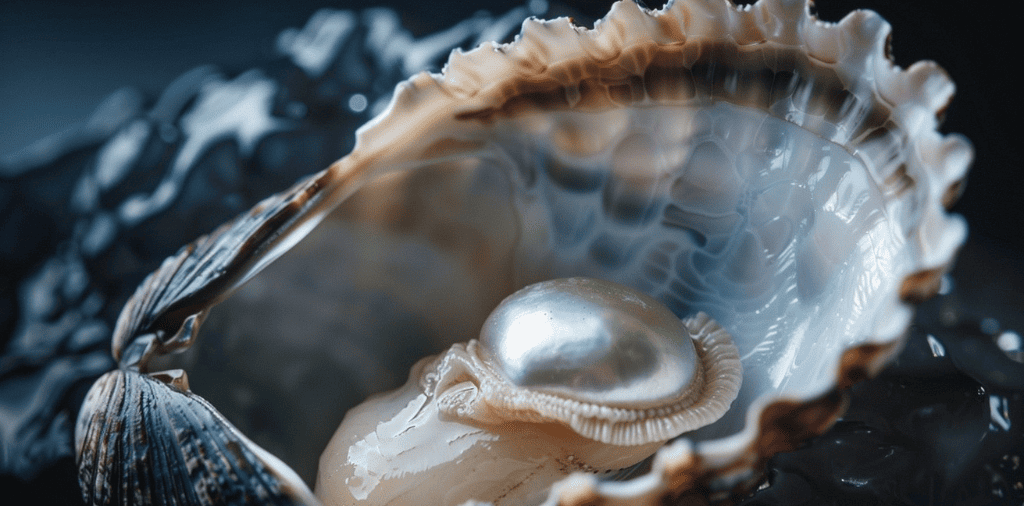
Like the oyster birthing a pearl from a wound, the agar tree gives birth to oud — a resin more precious than gold — only through injury, illness, or decay.

Nature’s answer to pain is never predictable.
Some wither.
Some harden.
And some transform, turning grief into legacy.

When the agar tree is wounded, its heartwood begins to weep — thick, fragrant resin slowly soaking the grain. The process may take decades. It cannot heal, but it survives.
Only when the tree dies and falls to the forest floor do we discover its dark, aromatic soul — saturated with oud. Earthy, ancient, incense-like. Like rain-soaked temples and memories of centuries past.

Oud is the scent of pain turned into beauty.
Its smoky, woody, spicy depth — tinged with sweetness — has moved hearts for millennia.

In Ancient Egypt, they burned it in temples to bridge the worlds of gods and men.
In China, scholars wrote treatises on how to contemplate its scent.
In Arabia, it was a gift from paradise itself — dropped into water to purify it, or burned to bless a home and guard it from evil.

Each land shapes oud in its own image.
Laotian oud is bitter and bold, like hard-earned wisdom.
Cambodian oud — soft and embracing, like twilight silence.
Indian oud — thick and resinous, with sharp, medicinal edges.

Its cost is high — and rightly so.
Every tree is a singular act of survival.
Today, we try to cultivate agarwood, to infect it with fungi on plantations.
But the oud born in controlled hands can never echo the wild soul of a forest-bred tree — touched by storms, by silence, by time.

Like pearls, oud is not about perfection.
It’s about transformation.
It’s about the ones who don’t break — but create something immortal instead.

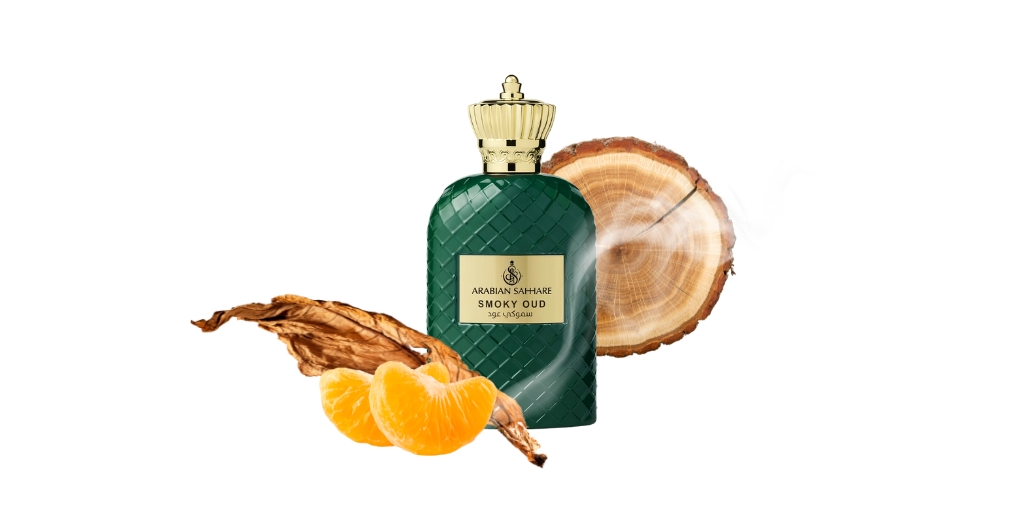
Smoky Oud by Arabian Sahhare
It smells like an ancient temple swallowed by jungle — where incense once hung in the air, now overtaken by vines, danger, and monsoon rain.
Majestic. Forgotten. Wild again.

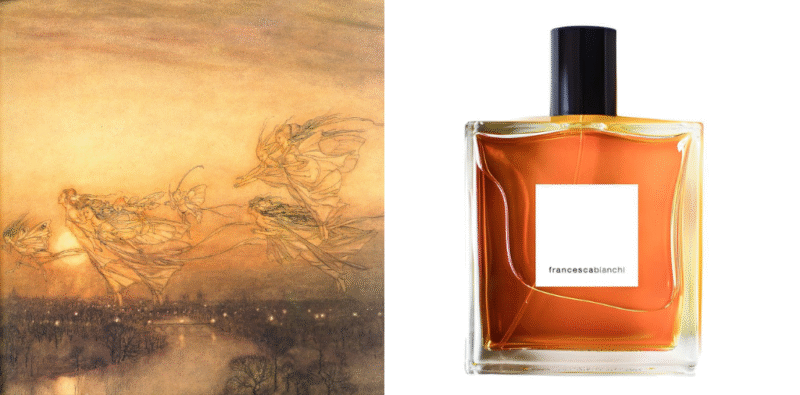
Forgotten Tales, or Francesca Bianchi

You are the reflection of the one I knew
before they became flesh.

— Jorge Luis Borges

By an unspoken rule of the genre, the most mesmerizing love stories always begin in darkness — perhaps to immediately repel those unworthy. Those who fear crossing through the dark are unworthy of light.

Fairies and elves — they’re not the same, yet mirror each other. In Celtic lore there are fairies, in Germanic and Norse myths there are elves, in Finnish tales forest spirits. Tolkien’s elves embodied nobility; Shakespeare’s, playful mischief; and for Francesca Bianchi — they became scent. Always, they serve the same purpose: to pull from within what hides inside and make the invisible visible. An elf is not a creature. It’s a state of being.

“They weep when we rejoice.
They laugh when we die.”

— English folklore about the “Good People”

But fairies are neither cruel nor kind. They don’t feel compassion as we do, yet they can comfort so deeply you forget who you were. In myths, they steal babies and leave changelings. They whisk humans to other worlds. But if you think about it — aren’t we humans doing the same? We replace our essence, reject our talents, abandon dreams — and become mere impostors of ourselves. In that light, fairies aren’t enemies of humans — they’re our potential, turned inside out and given form.

Fairies don’t lie — they distort. They don’t kill — they dissolve our outer shell, setting free hidden human passions.

“I saw in her gaze a meadow.
But when I stepped there, I fell into the sky.”

— Thomas de Quincey

We’re accustomed to sweetness being edible. But here — it’s not. It’s not chocolate — it’s patchouli: undeniably chocolate, but not flavor — an elixir. A mind-altering distortion. The honey here isn’t a treat — it’s primal, breathing, passionate energy. Everything feels familiar, yet warped, as if someone rebuilt a gourmet dessert from a dream. The cacophony and chaos at first dissolve into myriads of olfactory mosaics, each unique as a snowflake, each perfect.

A similar feeling washes over you when you stare at the night sky. At first—a void, distant sparks. Chaos. Then constellations emerge, galaxies come into view, and your mind races through light-years — into other worlds, toward other suns, or perhaps toward someone else entirely.

Francesca has undoubtedly walked that path — the path of embracing her own nature. She found new power and mastered the elvish. But humans don’t understand the language of fairies. So she began to create perfumes. Because the olfactory tongue is more universal than any verbal language.

Even here—the complexity remains. People fear her scents. Because it is that very darkness you must pass through to see the light and feel the fire’s embrace. Her elves speak not in words, but in scents. And if you hear them — it means your essence is ready to emerge.


Francesca Bianchi by miss Tantea

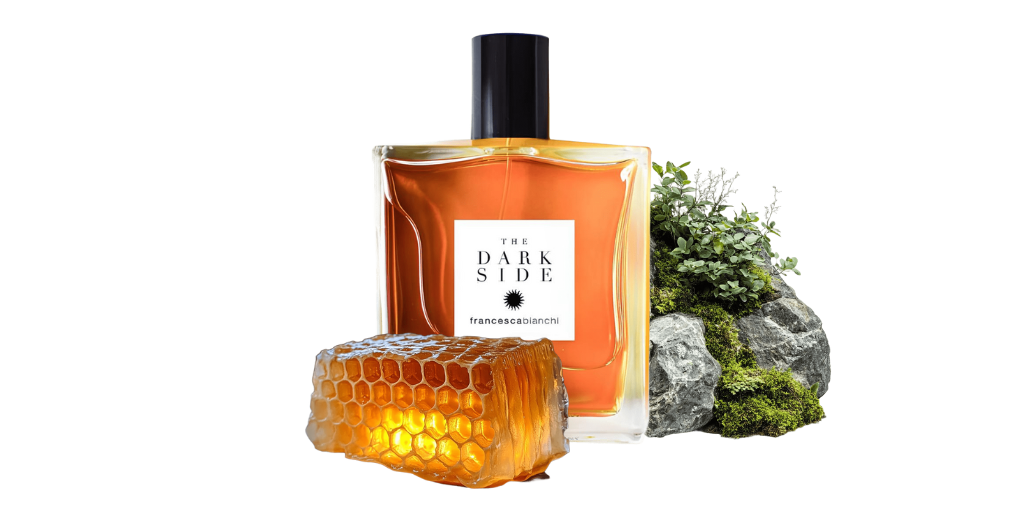
The Dark Side — the mature love between Alice and her Mad Hatter. He too is fairy-born but long ago crossed to the other side, so distant from common sense. Young Alice can’t understand him — even his simple words are warped, like the fragrance itself: each note familiar, yet entirely alien. Here honey smells of incense, sandalwood tastes like tea spice, violet is the color of the Hatter’s eyes, and iris is not powder — it’s sugar glaze. This is the Looking-Glass, The Dark Side.

Francesca Bianchi by miss Tantea

Etruscan Water — a forest from Guillermo del Toro’s darkest myth. A faun, ancient and fairy-born, hides true intent in distorted reality. Here water smells metallic, air thick with bitter herbs and smoke. This is a realm where essence defies words. Like in the film, the fragrance transforms, luring you into hidden corners — you easily lose your way and face primal fears. It’s a journey reminiscent of the heroine’s trials: to emerge anew.


True, intoxicating love always begins with trials. And anyone brave enough to face them will be touched by love — and shed their old self.